Author: gestlumi@gmail.com

  • POST 12 (Original) — El Futuro del Equilibrio de la Red Eléctrica en España

    POST 12 (Original) — El Futuro del Equilibrio de la Red Eléctrica en España

    Comprender la importancia de las soluciones para la red energética de España

    La red eléctrica de España está experimentando una profunda transformación. Las centrales eléctricas tradicionales, que antes proporcionaban electricidad constante y predecible, están siendo sustituidas gradualmente por fuentes renovables como la energía eólica, solar y mareomotriz. Estas fuentes son excelentes para reducir las emisiones de carbono, pero presentan un desafío: su producción puede ser impredecible e intermitente.

    Aquí es donde entra en juego el equilibrio de la red. La red debe ajustarse constantemente a las fluctuaciones de la oferta y la demanda de energía para mantener la estabilidad. Sin un equilibrio eficaz, corremos el riesgo de sufrir apagones o desperdiciar energía. Los servicios de equilibrio de la red garantizan que la electricidad que circula por ella se ajuste al consumo en tiempo real.

    Por ejemplo, cuando una ráfaga de viento repentina aumenta la producción de un aerogenerador, los operadores de la red deben reducir rápidamente la energía procedente de otras fuentes o almacenar el exceso de energía. Del mismo modo, cuando el viento disminuye, otras fuentes de energía o la energía almacenada deben cubrir la demanda. Este equilibrio dinámico es fundamental para un sistema energético fiable y sostenible.
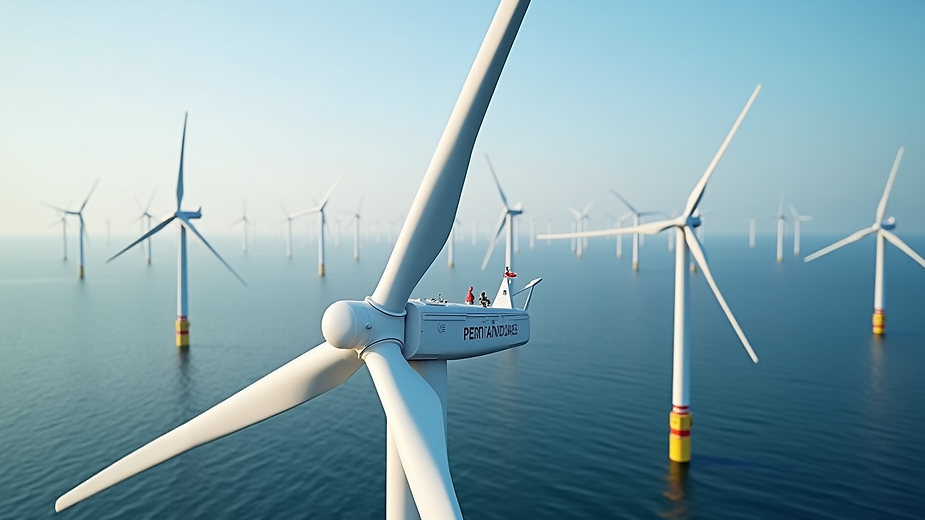
    Turbinas de viento en altamar generando electricidad
    Turbinas de viento en altamar generando electricidad

    Cómo funcionan los servicios de equilibrio de la red eléctrica en España

    Los servicios de equilibrio de la red eléctrica en España se basan en una combinación de tecnologías y estrategias. A continuación, se detallan los componentes principales:

    1. Respuesta a la demanda (DSR)

      Esto implica ajustar la demanda de los consumidores para que coincida con la oferta. Por ejemplo, los grandes consumidores industriales podrían reducir su consumo eléctrico durante las horas punta o cuando la producción de energías renovables es baja. Esta flexibilidad ayuda a equilibrar la red sin necesidad de generar energía adicional.

    2. Sistemas de almacenaje energético

      Las baterías y otras tecnologías de almacenamiento guardan el exceso de energía cuando la oferta supera la demanda y la liberan cuando es necesario. Esto es especialmente importante para las energías renovables, que pueden ser abundantes en ocasiones y escasas en otras.

    3. Generación Flexible

      Algunas centrales eléctricas pueden aumentar o disminuir su producción rápidamente. Estos generadores flexibles actúan como respaldo para las energías renovables, cubriendo las deficiencias cuando la producción de energía renovable disminuye.

    4. Soluciones Híbridas

      Los enfoques innovadores combinan diversas tecnologías. Por ejemplo, los sistemas híbridos de energía undimotriz y almacenamiento pueden aprovechar la energía del océano o almacenar el excedente para su uso posterior. Este es un ámbito prometedor para España, dada su extensa costa.

    La integración de estos servicios requiere sistemas de control sofisticados y análisis de datos en tiempo real. Los operadores de la red monitorean constantemente la red y toman decisiones en fracciones de segundo para mantener el equilibrio.

    El papel de la energía undimotriz híbrida y su almacenamiento en el equilibrio de la red eléctrica

    Uno de los avances más interesantes que he descubierto es el uso de soluciones híbridas de energía undimotriz y almacenamiento. La costa de España ofrece un enorme potencial para la energía undimotriz, que es más predecible que la eólica o la solar. Al combinar la generación de energía undimotriz con el almacenamiento, estos sistemas pueden proporcionar un suministro eléctrico constante y fiable, y contribuir de forma permanente a la estabilidad de la red eléctrica. Un generador de energía renovable que suministra energía o una solución de almacenamiento que la absorbe cuando no se necesita perjudica la red.

    Imagínese un Dispositivo Energético Funcionalmente Híbrido (FHED, por sus siglas en inglés), como un ESWave, cargándose con el excedente de energía procedente de una noche ventosa, en un momento de baja demanda porque mucha gente está durmiendo. A continuación, el ESWave liberará sus reservas de energía almacenada por la mañana, cuando se produzca el pico de demanda. ¿Eso es todo? En absoluto.

    Una vez que el ESWave libera toda la energía almacenada se detiene, pero entonces comienza a capturar la energía del océano cambiando al modo de generación. Cuando la actividad de las olas es alta, el exceso de energía se almacena en otros ESWaves. Cuando las olas se calman, la energía almacenada se libera para mantener la estabilidad de la red. Este enfoque híbrido no solo suaviza las fluctuaciones del suministro, sino que también reutiliza las instalaciones marinas desmanteladas, reduciendo así el impacto ambiental.

    Esta tecnología se alinea perfectamente con el objetivo de reducir la dependencia del carbono y crear un futuro energético sostenible. Es beneficioso tanto para el medio ambiente como para el mercado energético.
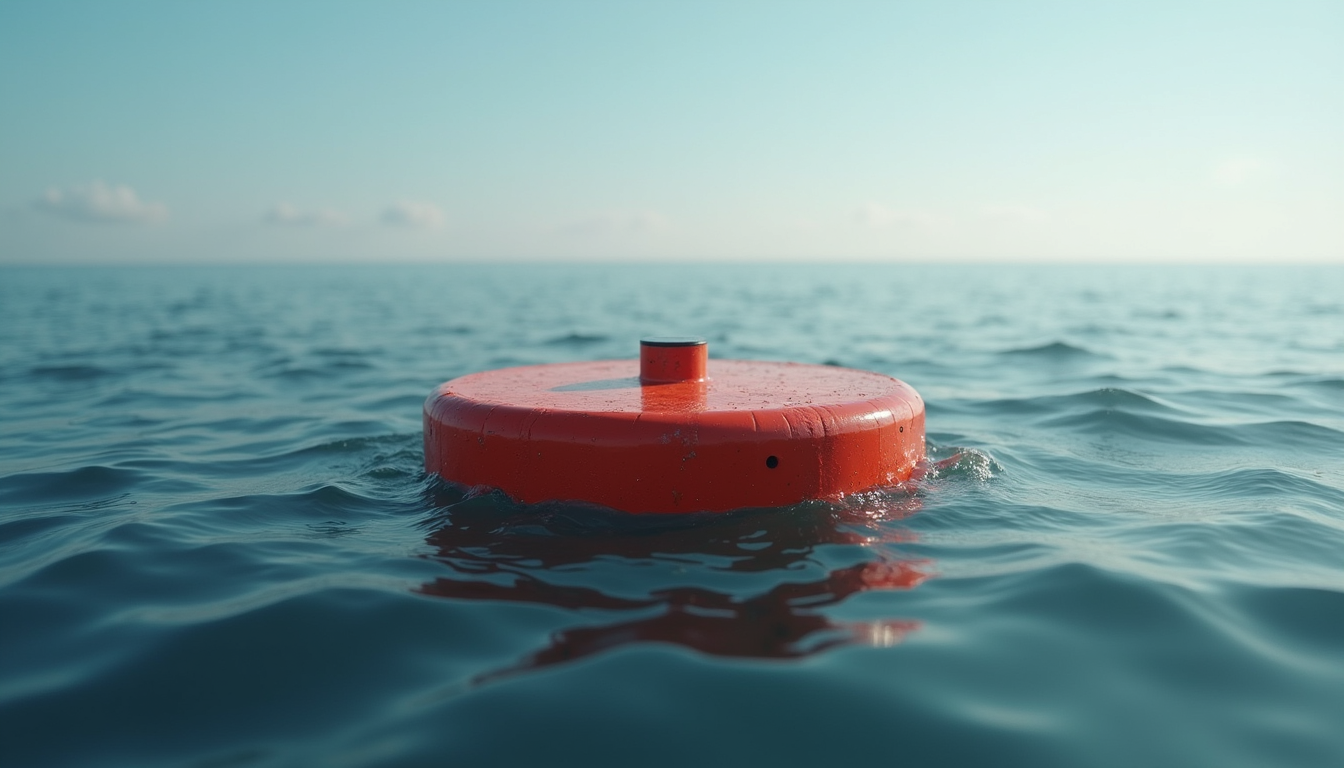
    Vista de cerca de un ESWave, un dispositivo energético funcionalmente híbrido instalado en alta mar.
    Vista de cerca de un ESWave, un dispositivo energético funcionalmente híbrido instalado en alta mar.

    Recomendaciones Prácticas para mejorar el equilibrio de la red eléctrica

    Si participa en la gestión o inversión en infraestructura energética, aquí tiene algunas medidas prácticas a considerar:

    • Invierta en tecnologías flexibles: Priorice el almacenamiento de energía y los activos de generación flexible. Estos proporcionan la agilidad necesaria para responder a los cambios rápidos en la oferta y la demanda.
    • Aproveche el análisis de datos: Utilice la monitorización avanzada y el análisis predictivo para anticipar las fluctuaciones y optimizar las operaciones de la red.
    • Explore soluciones híbridas: Considere la combinación de fuentes renovables con almacenamiento, especialmente la energía undimotriz por su disponibilidad prácticamente eterna, para crear sistemas eléctricos más fiables. Hibridar significa que una máquina hace el trabajo de dos, de un modo muchísimo más eficiente.
    • Participe en la gestión de la demanda: Colabore con los grandes consumidores de energía para implementar programas de gestión de la demanda que puedan aliviar la presión sobre la red durante las horas punta.
    • Apoye la innovación y la reutilización: Fomente proyectos que reutilicen la infraestructura marina existente para nuevas soluciones energéticas, reduciendo costes e impacto ambiental.

    Al adoptar estas estrategias, España puede seguir liderando la innovación en el equilibrio de la red y garantizar un futuro energético resiliente y con bajas emisiones de carbono.

    Mirando hacia el futuro: El futuro del equilibrio de la red eléctrica en España

    El futuro de la red eléctrica de España es prometedor, pero complejo. A medida que aumenta la penetración de las energías renovables, la necesidad de servicios sofisticados de equilibrio de la red no hará más que crecer. Empresas como TWEFDA Limited son pioneras en soluciones híbridas de energía undimotriz y almacenamiento que podrían revolucionar la gestión del suministro energético.

    A menudo me pregunto con qué rapidez se generalizarán estas innovaciones y qué nuevas tecnologías surgirán. ¿Veremos una mayor integración de la IA y el aprendizaje automático para predecir y gestionar las fluctuaciones de la red? ¿Cómo evolucionarán las políticas y la normativa para respaldar estos cambios?

    Una cosa está clara: el camino a seguir requiere la colaboración entre operadores de la red, parques de energía renovable, activos marinos e inversores. Juntos, pueden construir una red que no solo sea fiable, sino también sostenible y adaptable.

    Para quienes estén interesados ​​en los aspectos técnicos y operativos, explorar los servicios de equilibrio de la red en España ofrece abundante información sobre las prácticas actuales y las oportunidades futuras.

    Construyendo un futuro energético sostenible

    Al reflexionar sobre el camino recorrido para comprender el equilibrio de la red eléctrica, me siento optimista sobre el potencial de España para liderar este ámbito. La combinación de tecnologías innovadoras, inversiones estratégicas y un compromiso con la sostenibilidad sienta las bases para un sistema energético resiliente.

    Ya sea mediante la energía undimotriz híbrida, el almacenamiento avanzado o una gestión de la demanda más inteligente, las soluciones están a nuestro alcance. El reto reside en integrarlas de forma eficaz y a gran escala.

    Si formas parte de este ecosistema, te animo a mantenerte informado, a adoptar la innovación y a pensar de forma creativa sobre cómo contribuir a una red eléctrica equilibrada y sostenible. Al fin y al cabo, el futuro de la energía depende de las decisiones que tomemos hoy. Puedes contactarnos aquí

  • POST 11 (Original) — Exploring UK Energy Grid Solutions: The Future of Grid Balancing Services

    POST 11 (Original) — Exploring UK Energy Grid Solutions: The Future of Grid Balancing Services

    When I first started diving into the world of energy grids, I was struck by how complex and vital grid balancing really is. It’s not just about keeping the lights on; it’s about managing a delicate dance between supply and demand, especially as the UK shifts towards renewable energy. Today, I want to take you on a journey through the evolving landscape of UK energy grid solutions, focusing on the innovative grid balancing services that are shaping our energy future.

    Understanding the Importance of UK Energy Grid Solutions

    The UK’s energy grid is undergoing a massive transformation. Traditional power plants, which once provided steady and predictable electricity, are gradually being replaced by renewable sources like wind, solar, and wave energy. These sources are fantastic for reducing carbon emissions, but they come with a challenge: their output can be unpredictable and intermittent.

    This is where grid balancing comes in. The grid must constantly adjust to fluctuations in energy supply and demand to maintain stability. Without effective balancing, we risk blackouts or wasted energy. Grid balancing services ensure that the electricity flowing through the network matches consumption in real-time.

    For example, when a sudden gust of wind boosts wind turbine output, grid operators need to quickly reduce power from other sources or store the excess energy. Conversely, when the wind drops, other power sources or stored energy must fill the gap. This dynamic balancing act is critical for a reliable and sustainable energy system.

    Eye-level view of offshore wind turbines generating electricity
    Eye-level view of offshore wind turbines generating electricity

    How Grid Balancing Services Work in the UK

    Grid balancing services in the UK rely on a combination of technologies and strategies. Here’s a breakdown of the main components:

    1. Demand Side Response (DSR)

      This involves adjusting consumer demand to match supply. For instance, large industrial users might reduce their electricity use during peak times or when renewable output is low. This flexibility helps balance the grid without needing extra power generation.

    2. Energy Storage Systems

      Batteries and other storage technologies store excess energy when supply exceeds demand and release it when needed. This is especially important for renewable energy, which can be abundant at times but scarce at others.

    3. Flexible Generation

      Some power plants can ramp their output up or down quickly. These flexible generators act as a backup to renewables, filling in gaps when renewable output dips.

    4. Hybrid Solutions

      Innovative approaches combine multiple technologies. For example, hybrid wave energy and storage systems can harness ocean energy or storing excess power for later use. This is a promising area for the UK, given its extensive coastline.

    The integration of these services requires sophisticated control systems and real-time data analytics. Grid operators constantly monitor the network and make split-second decisions to keep everything balanced.

    The Role of Hybrid Wave Energy and Storage in Grid Balancing

    One of the most exciting developments I’ve come across is the use of hybrid wave energy and storage solutions. The UK’s coastline offers immense potential for wave energy, which is more predictable than wind or solar. By combining wave energy generation with storage, these systems can provide a steady, reliable power supply, and permanently help the Grid. A renewable generator delivering energy or a storage solution that absorbs energy when it is not required harm the Grid.

    Imagine a Functionally Hybrid Energy Device (FHED) such as an ESWave charging with surplus energy that comes from a windy night at a time when demand is low because many people are sleeping. Then, the FHED will release its reserves of stored energy in the morning when there is a peak in demand. ¿Is this all? Not, at all.

    After the FHED releases all stored energy, the ESWave is flat but then it starts capturing the ocean’s power by switching to generation mode. When wave activity is high, excess energy is stored in other ESWaves. When waves calm, the stored energy is released to maintain grid stability. This hybrid approach not only smooths out supply fluctuations but also repurposes decommissioned offshore assets, reducing environmental impact.

    This technology aligns perfectly with the goal of reducing carbon dependency and creating a sustainable energy future. It’s a win-win for the environment and the energy market.

    Close-up view of an ESWave, a functionally hybrid energy device installed offshore
    Close-up view of an ESWave, a functionally hybrid energy device installed offshore

    Practical Recommendations for Enhancing Grid Balancing

    If you’re involved in managing or investing in energy infrastructure, here are some actionable steps to consider:

    • Invest in Flexible Technologies: Prioritise energy storage and flexible generation assets. These provide the agility needed to respond to rapid changes in supply and demand.
    • Leverage Data Analytics: Use advanced monitoring and predictive analytics to anticipate fluctuations and optimise grid operations.
    • Explore Hybrid Solutions: Look into combining renewable sources with storage, especially wave energy, to create more reliable power systems.
    • Engage with Demand Side Response: Collaborate with large energy consumers to implement demand response programs that can ease grid pressure during peak times.
    • Support Innovation and Repurposing: Encourage projects that repurpose existing offshore infrastructure for new energy solutions, reducing costs and environmental impact.

    By adopting these strategies, the UK can continue to lead in grid balancing innovation and ensure a resilient, low-carbon energy future.

    Looking Ahead: The Future of Grid Balancing in the UK

    The future of the UK’s energy grid is bright but complex. As renewable penetration increases, the need for sophisticated grid balancing services will only grow. Companies like TWEFDA Limited are pioneering hybrid wave energy and storage solutions that could revolutionise how we manage energy supply.

    I often wonder how quickly these innovations will scale and what new technologies will emerge. Will we see more integration of AI and machine learning to predict and manage grid fluctuations? How will policy and regulation evolve to support these changes?

    One thing is clear: the path forward requires collaboration between grid operators, renewable energy farms, offshore assets, and investors. Together, they can build a grid that is not only reliable but also sustainable and adaptable.

    For those interested in the technical and operational aspects, exploring grid balancing services uk offers a wealth of information on current practices and future opportunities.

    Embracing a Sustainable Energy Future

    As I reflect on the journey of understanding grid balancing, I’m optimistic about the UK’s potential to lead in this space. The combination of innovative technologies, strategic investments, and a commitment to sustainability sets the stage for a resilient energy system.

    Whether it’s through hybrid wave energy, advanced storage, or smarter demand management, the solutions are within reach. The challenge lies in bringing them together effectively and at scale.

    If you’re part of this ecosystem, I encourage you to stay informed, embrace innovation, and think creatively about how to contribute to a balanced and sustainable grid. After all, the future of energy depends on the choices we make today.

  • POST 10 (Original) — TWEFDA Contact Guide: Contacting TWEFDA Limited

    POST 10 (Original) — TWEFDA Contact Guide: Contacting TWEFDA Limited

    When it comes to advancing renewable energy solutions, staying connected with innovative companies like TWEFDA Limited is essential. Reaching out to TWEFDA online has become more streamlined, allowing stakeholders in the energy sector to engage directly with their pioneering hybrid wave energy and storage technologies. Whether you are managing national grid operations, overseeing renewable energy farms, or investing in offshore assets, understanding how to contact TWEFDA effectively can open doors to collaboration and sustainable energy advancements.

    TWEFDA Contact Guide: How to Reach Out Efficiently

    Navigating the process of contacting TWEFDA online is straightforward once you know the right channels. TWEFDA Limited has positioned itself as a leader in grid balancing by integrating wave energy with storage solutions, which means timely communication is crucial for project planning and investment decisions.

    Here are some practical steps to ensure your message reaches the right team:

    • Visit the Official Website: The primary point of contact is through TWEFDA’s official website, where you can find dedicated contact forms tailored for different inquiries such as partnerships, technical support, or investment opportunities.
    • Use Direct Email Addresses: For more specific queries, TWEFDA provides direct email contacts for departments like R&D, business development, and customer service. The general info@twefda.com will open an entry door.
    • Leverage Social Media Channels: While more formal communication is preferred, TWEFDA maintains active profile on LinkedIn, which can be useful for quick updates or informal engagement.
    • Attend Virtual Events: Nowadays, many industry conferences and webinars have moved online. Participating in these events where TWEFDA is present can provide direct interaction opportunities.

    By following these steps, you can ensure your communication is clear, professional, and directed to the appropriate team members.

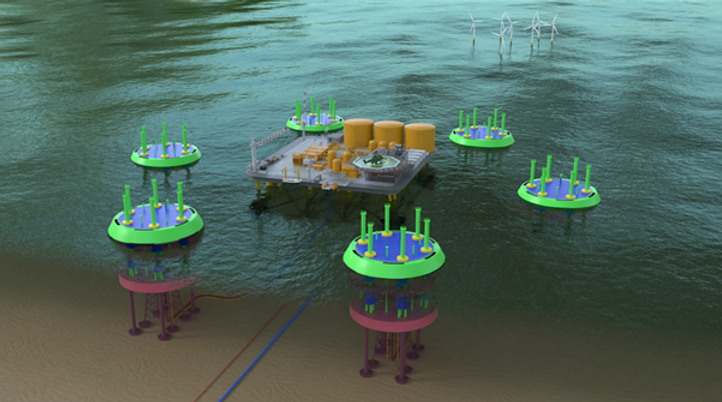
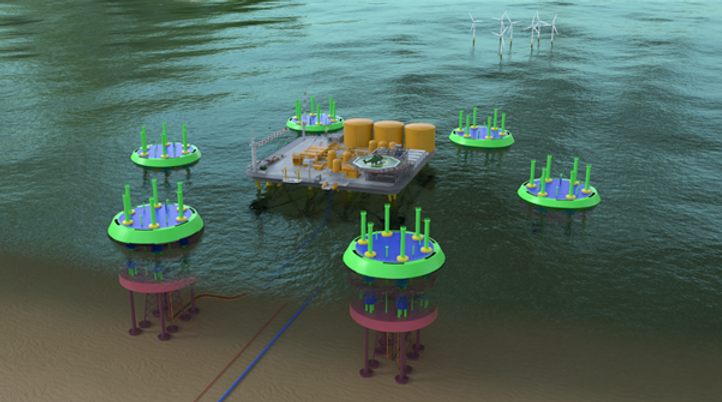
    A conceptual depiction of a TWEFDA Association showcasing a sustainable energy solution, featuring six ESWaves surrounding a central Offshore Hybrid Asset, wind turbines in the background, and a link to the onshore grid.
    A conceptual depiction of a TWEFDA Association showcasing a sustainable energy solution, featuring six ESWaves surrounding a central Offshore Hybrid Asset, wind turbines in the background, and a link to the onshore grid.

    Understanding TWEFDA’s Communication Priorities

    TWEFDA’s mission to revolutionise grid balancing through hybrid wave energy and storage means their communication channels are designed to support innovation and collaboration. When you contact TWEFDA, expect a focus on:

    • Technical Precision: Queries related to technology specifications, integration with existing grid infrastructure, and performance metrics are handled with detailed technical responses.
    • Sustainability Goals: TWEFDA emphasises reducing carbon dependency, so discussions often include environmental impact assessments and sustainability strategies.
    • Asset Repurposing: One of TWEFDA’s unique selling points is repurposing decommissioned offshore assets. If your inquiry involves this aspect, be prepared to discuss asset history and potential for conversion.

    To make your communication effective, prepare your questions or proposals with these priorities in mind. This approach not only speeds up response times but also aligns your objectives with TWEFDA’s vision.

    How to Contact TWEFDA

    If you want to contact the TWEFDA team, the process is designed to be user-friendly and responsive. The online contact form on their website is the most direct method. Here’s what you should keep in mind:

    • Fill in All Required Fields: Provide detailed information about your organisation, the nature of your inquiry, and any relevant project details.
    • Attach Supporting Documents: If you have technical proposals, project plans, or investment outlines, attach them to your message to provide context.
    • Specify Your Preferred Contact Method: Whether you prefer email, phone, or video calls, indicating this helps TWEFDA tailor their response.
    • Follow Up: If you don’t receive a response within a week, a polite follow-up email referencing your initial contact can help keep the conversation active.

    This online approach ensures that your inquiry is logged and directed to the appropriate department, facilitating quicker and more accurate responses.

    High angle view of a person typing on a laptop with a renewable energy website open
    High angle view of a person typing on a laptop with a renewable energy website open

    Tips for Effective Communication with TWEFDA

    From my experience, reaching out to a technical and innovative company like TWEFDA requires a balance of professionalism and clarity. Here are some tips to enhance your communication:

    1. Be Clear and Concise: Avoid jargon unless necessary. Explain your needs or questions in straightforward language.
    2. Highlight Your Value Proposition: If you represent a project or investment opportunity, briefly outline how it aligns with TWEFDA’s goals.
    3. Prepare Technical Details: For grid operators or offshore asset managers, including technical specifications or operational data can be very helpful.
    4. Respect Their Time: Keep your initial message focused. Save detailed discussions for follow-up conversations.
    5. Use Professional Tone: Friendly but formal language works best, especially in first contacts.

    By following these guidelines, you increase the chances of a productive dialogue that could lead to meaningful partnerships or solutions.

    Exploring the Benefits of Connecting with TWEFDA

    Why should you prioritise contacting TWEFDA? The benefits are substantial, especially for those involved in energy infrastructure and investment:

    • Access to Cutting-Edge Technology: TWEFDA’s hybrid wave energy systems offer a unique way to stabilise grids and reduce reliance on fossil fuels.
    • Sustainability Leadership: Partnering with TWEFDA aligns your projects with global carbon reduction targets.
    • Innovative Asset Use: Their approach to repurposing decommissioned offshore assets can unlock new value from existing infrastructure.
    • Expert Support: TWEFDA’s team provides technical and strategic support to help integrate their solutions smoothly.

    Engaging with TWEFDA can therefore be a strategic move to future-proof your energy operations and investments.

    Looking Ahead: Staying Connected with TWEFDA

    As the energy landscape evolves, maintaining open lines of communication with innovators like TWEFDA is more important than ever. Whether you are exploring new technologies or seeking to enhance your existing infrastructure, TWEFDA offers a gateway to sustainable and efficient energy solutions.

    Remember, the key to successful collaboration starts with a well-crafted initial contact. Use the resources available online, prepare your information carefully, and don’t hesitate to reach out. The future of grid balancing and renewable energy integration depends on partnerships built on clear communication and shared goals.

    By staying proactive and informed, you can play a part in shaping a cleaner, more resilient energy future with TWEFDA.

    contact TWEFDA online

  • POST 9 (Original) — TWEFDA’s Renewable Energy Solutions: A Deep Dive into Innovation and Impact

    POST 9 (Original) — TWEFDA’s Renewable Energy Solutions: A Deep Dive into Innovation and Impact

    When exploring TWEFDA’s energy solutions, it is easy to get struck by how they blend cutting-edge technology with practical sustainability goals. The energy sector is evolving rapidly, and TWEFDA is at the forefront, especially with their hybrid wave energy and storage systems. This post will walk you through the key aspects of their approach, the technologies involved, and why their work matters for grid operators, renewable farms, offshore oil and gas assets, and investors alike.

    Understanding TWEFDA’s Renewable Energy Solutions

    TWEFDA’s energy solutions focus on harnessing the power of the ocean through wave energy converters combined with advanced energy storage. This hybrid approach addresses one of the biggest challenges in renewable energy: intermittency. By storing excess energy generated during peak wave activity, TWEFDA ensures a steady supply to the grid, smoothing out fluctuations that can destabilise power systems.

    What makes this approach particularly exciting is the repurposing of decommissioned offshore oil and gas assets. Instead of letting these structures rust away, TWEFDA transforms them into platforms for renewable energy generation. This not only reduces carbon dependency but also maximises the use of existing infrastructure, cutting down on new construction costs and environmental disruption.

    Here are some core components of their solutions:

    • Functionally Hybrid Energy Device (FHED): A device that has two functions, in this case complementary functions of Generation or Storage on demand. The device, called the ESWave, captures energy from ocean waves acting as generator or stores energy for later use. All in one single tool with one single PTO (Power Take-Off)
    • Hybrid in Generation Mode: The ESWave acts as a Point Absorber harnessing the relative motion between the steady seabed and the fluctuating sea surface. In addition, it harnesses the Weight Changing Energy, exploring a new area in physics where what goes up differs from what goes down, introducing a previously unexplored energy conversion mechanism within known physical laws.
    • Hybrid in Storage Mode: Its hydraulic mechanism enhances performance in storage mode by effectively storing and releasing gravitational energy, capitalizing on tidal ranges.
    • Grid Integration Technology: Software and hardware that manage energy flow to maintain grid stability.
    • Asset Repurposing: Converting offshore oil and gas platforms into renewable energy hubs.

    This combination creates a resilient, scalable system that can be deployed in various marine environments, offering a promising path for sustainable energy expansion.

    Eye-level view of offshore ESWaves showing its hybrid functionallity
    Eye-level view of offshore ESWaves showing its hybrid functionallity

    Why Renewable Energy Solutions Matter for Grid Stability

    Grid operators face a constant balancing act. They must match electricity supply with demand in real time, or risk blackouts and equipment damage. Renewable sources like wind and solar are fantastic but can be unpredictable. TWEFDA’s hybrid wave energy and storage solutions provide a more reliable alternative.

    By integrating wave energy, which tends to be more consistent than wind or solar, with storage systems, TWEFDA helps smooth out the peaks and troughs in power generation. This means grid operators can rely on a steadier flow of electricity, reducing the need for fossil fuel backup plants.

    Moreover, the ability to repurpose offshore oil and gas assets is a game-changer. These platforms are already connected to the grid and have existing infrastructure, which means faster deployment and lower costs. This approach also aligns with global decarbonisation goals by turning liabilities into assets.

    For investors, this model offers a compelling mix of innovation and pragmatism. It’s not just about new technology but about making the most of what’s already there, reducing risk and improving returns.

    Which Renewable Resource did we use the most?

    In 2018, wave energy stood out as a key resource in TWEFDA’s portfolio. While wind and solar continue to dominate the renewable landscape, wave energy offers unique advantages, especially in coastal regions with strong maritime activity.

    Wave energy converters capture the mechanical energy of ocean waves and convert it into electricity. Unlike solar panels, which depend on sunlight, or wind turbines, which need wind, wave energy is more predictable and available day and night. This consistency makes it an excellent complement to other renewables.

    TWEFDA’s focus on wave energy is strategic. The UK and surrounding waters have some of the best wave energy potential in Europe. By leveraging this resource, TWEFDA not only diversifies the energy mix but also enhances grid resilience.

    The company’s hybrid systems combine wave energy with storage solutions, ensuring that excess power generated during high wave periods is saved and dispatched when demand peaks or when other renewables underperform.

    Close-up view of a general wave energy converter buoy floating on the sea surface
    Close-up view of a general wave energy converter buoy floating on the sea surface

    Practical Applications and Benefits of TWEFDA’s Energy Solutions

    Let’s get practical. How do these solutions translate into real-world benefits?

    1. Grid Balancing: The hybrid system helps maintain grid frequency and voltage stability, crucial for preventing outages.
    2. Carbon Reduction: By replacing fossil fuel peaker plants, TWEFDA’s solutions cut greenhouse gas emissions.
    3. Cost Efficiency: Repurposing offshore platforms reduces capital expenditure and speeds up project timelines.
    4. Energy Security: Diversifying energy sources with wave power reduces dependence on imported fuels.
    5. Job Creation: Developing and maintaining these systems supports skilled employment in coastal regions.

    For offshore oil and gas operators, this presents a sustainable exit strategy. Instead of decommissioning and dismantling costly infrastructure, they can convert assets into renewable energy sites, extending their operational life and generating new revenue streams.

    Investors benefit from a technology that is not only innovative but also backed by practical deployment strategies and clear environmental benefits. This reduces investment risk and aligns with increasing regulatory pressure for sustainable energy projects.

    Looking Ahead: The Future of Hybrid Wave Energy and Storage

    What’s next for TWEFDA and the broader renewable energy sector? The potential for hybrid wave energy and storage is vast. As battery technologies improve and costs fall, the efficiency and scalability of these systems will only increase.

    I believe the key to success lies in collaboration. Grid operators, renewable farms, offshore asset managers, and investors must work together to integrate these solutions seamlessly. Policy support and regulatory frameworks will also play a crucial role in accelerating adoption.

    TWEFDA’s vision to revolutionise grid balancing by combining wave energy with storage is not just ambitious – it’s necessary. The energy transition demands innovative solutions that are reliable, cost-effective, and environmentally responsible. TWEFDA’s energy solutions are a significant step in that direction.

    If you want to explore more about their approach, check out TWEFDA energy solutions.

    By embracing hybrid wave energy and storage, we can create a more resilient and sustainable energy future. It’s exciting to see how technology and creativity come together to solve some of the toughest challenges in energy today. What innovations will the next few years bring? I, for one, am eager to find out.

  • POST 8 (Original) — Innovations in Grid Technology UK Innovations

    POST 8 (Original) — Innovations in Grid Technology UK Innovations

    Balancing the electricity grid is no small feat. As demand fluctuates and renewable energy sources like wind and solar become more prevalent, the challenge of maintaining a stable and reliable power supply grows. Over the past few years, the UK has witnessed remarkable innovations in grid technology UK innovations that are transforming how we manage this delicate balance. Today, I want to take you through some of the most exciting advancements that are shaping the future of energy in the UK.

    The Growing Need for Smarter Grid Solutions

    The UK’s energy landscape is evolving rapidly. With ambitious targets to reduce carbon emissions and increase renewable energy capacity, the grid must adapt to handle intermittent power sources. Traditional methods of grid balancing, such as relying on fossil fuel power plants to ramp up or down, are no longer sufficient or sustainable.

    One of the key drivers behind these innovations is the integration of smart grid technologies. These systems use real-time data, advanced analytics, and automation to respond dynamically to changes in supply and demand. For example, smart meters installed in homes and businesses provide granular consumption data, enabling more precise forecasting and load management.

    Moreover, energy storage solutions like batteries and pumped hydro are becoming essential. They store excess energy generated during peak renewable production and release it when demand spikes or generation dips. This flexibility is crucial for maintaining grid stability without resorting to carbon-intensive backup power.

    Eye-level view of a modern electrical substation with smart grid equipment
    Eye-level view of a modern electrical substation with smart grid equipment

    Cutting-Edge Technologies Driving Grid Stability

    Several innovative technologies are at the forefront of the UK’s grid balancing revolution. Let’s explore some of the most impactful:

    Hybrid Energy Storage Systems

    Combining different types of energy storage can optimise performance and cost. For instance, pairing fast-response batteries with longer-duration storage like compressed air or hydrogen allows the grid to handle both short-term fluctuations and prolonged supply gaps. This hybrid approach is gaining traction in the UK, especially in regions with high renewable penetration.

    Demand Side Response (DSR)

    DSR programs incentivise consumers to adjust their electricity usage during peak times or when the grid is under stress. This can be as simple as delaying the start of a dishwasher or as complex as industrial facilities temporarily reducing output. Advances in automation and IoT devices make it easier than ever to participate in DSR, turning consumers into active grid participants.

    Advanced Forecasting and AI

    Predicting renewable generation and demand patterns is notoriously difficult due to weather variability and human behaviour. However, AI-powered forecasting tools are improving accuracy by analysing vast datasets, including weather models, historical consumption, and market trends. These insights help grid operators make informed decisions and pre-empt potential imbalances.

    Repurposing Decommissioned Assets

    An exciting trend is the reuse of decommissioned offshore oil and gas infrastructure for energy storage and grid support. Platforms and pipelines can be converted into sites for battery storage or hydrogen production, reducing costs and environmental impact. This aligns perfectly with the UK’s goal of a sustainable energy future.

    High angle view of offshore platform being converted for renewable energy use
    High angle view of offshore platform being converted for renewable energy use

    How These Innovations Impact Grid Operators and Investors

    For grid operators, these technologies offer enhanced control and resilience. Real-time monitoring and automated responses reduce the risk of blackouts and improve service reliability. Operators can also better integrate distributed energy resources, such as rooftop solar and community batteries, creating a more decentralised and flexible grid.

    Investors see significant opportunities in this evolving market. The demand for energy storage, smart grid infrastructure, and digital solutions is growing rapidly. Projects that combine renewable generation with innovative balancing technologies are particularly attractive, offering both environmental benefits and strong financial returns.

    Moreover, companies like TWEFDA Limited are pioneering hybrid wave energy and storage solutions that promise to revolutionise grid balancing. By harnessing ocean energy and integrating storage, they aim to reduce carbon dependency and breathe new life into decommissioned assets. This approach not only supports the grid but also contributes to the UK’s net-zero ambitions.

    Practical Steps to Embrace Grid Balancing Innovations

    If you’re involved in managing or investing in energy assets, here are some actionable recommendations to stay ahead:

    1. Evaluate Hybrid Storage Options: Assess the feasibility of combining battery storage with other technologies like hydrogen or compressed air to maximise flexibility.
    2. Leverage Data Analytics: Invest in AI-driven forecasting tools to improve operational planning and risk management.
    3. Engage in Demand Side Response: Explore partnerships with consumers and businesses to implement DSR programs that reduce peak load pressures.
    4. Consider Asset Repurposing: Identify opportunities to convert existing infrastructure for energy storage or renewable integration.
    5. Collaborate with Innovators: Work with companies developing cutting-edge solutions, such as hybrid wave energy systems, to pilot new technologies.

    By adopting these strategies, you can contribute to a more resilient and sustainable energy system while unlocking new value streams.

    Looking Ahead: The Future of UK Grid Balancing

    The journey towards a fully balanced, low-carbon grid is ongoing. As technology advances and policies evolve, the UK is well-positioned to lead in grid innovation. The integration of diverse energy sources, smarter control systems, and innovative storage solutions will be key to meeting future challenges.

    I’m particularly excited about the potential of hybrid wave energy combined with storage, as championed by TWEFDA Limited. This approach not only diversifies the energy mix but also utilises existing assets in a sustainable way. It’s a perfect example of how innovation can drive both environmental and economic benefits.

    If you want to dive deeper into the latest developments, I recommend exploring resources on uk grid balancing technology to stay informed about ongoing projects and opportunities.

    Together, these innovations are shaping a smarter, greener, and more reliable energy future for the UK.

    Thank you for joining me on this exploration of grid technology UK innovations. I hope this insight helps you navigate the exciting changes ahead.

  • POST 7 (Original) — Contact TWEFDA for Online Energy Solutions

    Updated: Apr 21

    When it comes to the future of energy, innovation is not just a buzzword – it’s a necessity. I’ve spent years observing how the energy sector evolves, and one company that consistently stands out is TWEFDA. Their approach to hybrid wave energy and storage solutions is not only groundbreaking but also essential for a sustainable future. If you’re involved in grid operations, renewable energy farms, offshore oil and gas assets, or investment in energy infrastructure, understanding how to contact TWEFDA for energy solutions could be a game-changer for your projects.

    Why Hybrid Wave Energy Matters Today

    The energy landscape is shifting rapidly. Traditional fossil fuels are becoming less viable due to environmental concerns and regulatory pressures. Renewable sources like solar and wind have made significant strides, but they come with intermittency challenges. This is where hybrid wave energy steps in.

    Wave energy harnesses the power of ocean waves to generate electricity. It’s a consistent and predictable resource, especially in coastal regions. TWEFDA’s hybrid systems combine wave energy with advanced storage solutions, ensuring a steady supply of power even when waves are calm. This hybrid approach addresses one of the biggest hurdles in renewable energy – reliability.

    Imagine a coastal renewable energy farm that can supply power 24/7 without relying heavily on the grid or fossil fuel backups. That’s the promise of hybrid wave energy. It’s not just about generating clean power; it’s about balancing the grid efficiently and reducing carbon dependency.

    Eye-level view of offshore wave energy converters in the sea
    Eye-level view of offshore wave energy converters in the sea

    How to Reach Out for Online Energy Solutions Contact

    If you’re considering integrating hybrid wave energy into your operations or investment portfolio, the first step is to establish a direct line of communication with experts who understand the technology and its applications. TWEFDA offers a streamlined way to connect with their team for tailored energy solutions.

    You can contact TWEFDA on https://www.twefda.com/get-in-touch to discuss your specific needs. Whether you’re managing a national grid or developing offshore assets, their experts provide insights and customised solutions that align with your goals. The online contact option is designed to be user-friendly, ensuring you get prompt responses and detailed information.

    When reaching out, be prepared to share details about your current energy infrastructure, challenges you face with grid balancing, and your sustainability targets. This will help TWEFDA tailor their recommendations effectively.

    The Technology Behind TWEFDA’s Solutions

    Understanding the technology helps appreciate why TWEFDA is a leader in this space. Their hybrid wave energy systems combine generation from wave energy converters with state-of-the-art energy storage. All in one single unit. This combination allows for:

    • Continuous power generation: It be by converting sea power or releasing stored energy.
    • Energy storage: Excess energy is stored in the ESWave to be used during high demand of grid activity.
    • Grid balancing: The system can feed power into the grid when demand peaks, or absorbe surplus energy reducing curtailment.
    • Repurposing decommissioned assets: TWEFDA can innovatively use old offshore oil and gas infrastructure to support their wave energy systems, reducing waste and costs.

    This approach not only enhances energy security but also supports the transition to a low-carbon economy. The integration of storage is crucial because it smooths out fluctuations, making wave energy a dependable source.

    Close-up view of dual complementary functionalities of generation or storage on demand.
    Close-up view of dual complementary functionalities of generation or storage on demand.

    Practical Benefits for Grid Operators and Investors

    From my experience, grid operators and investors are often cautious about adopting new technologies. However, TWEFDA’s solutions offer tangible benefits that make the transition easier and more profitable:

    1. Reduced Carbon Footprint: By integrating wave energy, operators can significantly cut emissions.
    2. Cost Efficiency: Using decommissioned offshore assets lowers capital expenditure.
    3. Enhanced Grid Stability: Hybrid systems provide a reliable power supply, reducing blackouts and grid stress.
    4. Attractive Investment Opportunities: The growing demand for renewable energy infrastructure means early investors can benefit from long-term returns.
    5. Regulatory Compliance: Many regions are tightening emissions standards; adopting hybrid wave energy helps meet these requirements.

    For investors, the combination of sustainability and profitability is compelling. The technology is scalable, and the market for renewable energy is expanding rapidly. For grid operators, the ability to balance supply and demand with minimal environmental impact is invaluable.

    Steps to Implement Hybrid Wave Energy Solutions

    If you’re ready to explore hybrid wave energy, here’s a practical roadmap based on what I’ve learned from industry leaders like TWEFDA:

    1. Assessment: Evaluate your current energy mix and identify gaps in reliability or sustainability.
    2. Feasibility Study: Conduct site-specific studies to understand wave energy potential and infrastructure needs.
    3. Engage Experts: Reach out to TWEFDA to discuss customised solutions and integration strategies.
    4. Proof of concept: Help us prove a concept at Peer-Reviewed Desktop Proof of Concept.
    5. Pilot Projects: Start with small-scale installations to test performance and grid interaction.
    6. Scale Up: Based on pilot success, expand the system to cover larger grid areas or offshore assets.
    7. Monitor and Optimize: Use data analytics to continuously improve system efficiency and output.

    This step-by-step approach reduces risk and ensures that the technology fits your operational and financial goals.

    Looking Ahead: The Future of Sustainable Energy

    The energy sector is at a crossroads. The choices made today will shape the environmental and economic landscape for decades. Companies like TWEFDA are not just providing technology; they are pioneering a new way to think about energy production and consumption.

    By embracing hybrid wave energy and storage solutions, we can reduce our carbon footprint, make better use of existing infrastructure, and create a more resilient energy grid. It’s exciting to see how these innovations are transforming offshore assets from liabilities into valuable energy resources.

    If you want to be part of this transformation, don’t hesitate to contact TWEFDA on https://www.twefda.com/get-in-touch. Their team is ready to help you navigate the complexities of hybrid wave energy and unlock its full potential.

    The journey to a sustainable energy future is complex but rewarding. With the right partners and technology, we can achieve a balance between environmental responsibility and energy security. TWEFDA’s hybrid wave energy solutions are a beacon of hope in this endeavour, offering practical, scalable, and innovative options for the energy challenges ahead.

  • POST 6 (Original) — First approach to TWEFDA’s technology

    Updated: May 19

    Listen to Francisco Javier Dominguez Martin in an excellent podcast that was recently launched by Spencer Mawer, featuring TWEFDA’s technology.

    Google Drive folder

    Spencer Mawer has served as a remarkable representative for TWEFDA, allowing us to share the enthusiasm people need to embrace a world brimming with imagination, within a constantly evolving startup community that discovers solutions to our most significant challenges.

    Remember to speak with Spencer Mawer to showcase your accomplishments.

  • POST 5 (Original) — DFMEA and Technical Risk Assessment

    POST 5 (Original) — DFMEA and Technical Risk Assessment

    Updated: Nov 18, 2024

    1. Introduction to DFMEA and Technical Risk Assessment

    Objective:

    • Identify potential failure modes for the energy device.
    • Assess the severity, occurrence, and detectability of these failure modes.
    • Develop mitigation strategies to reduce the likelihood of failures and their impact.
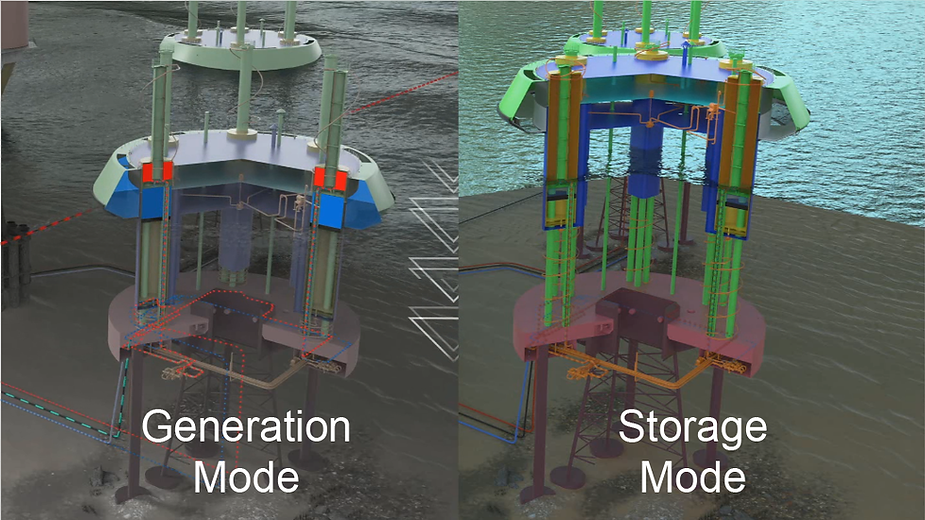
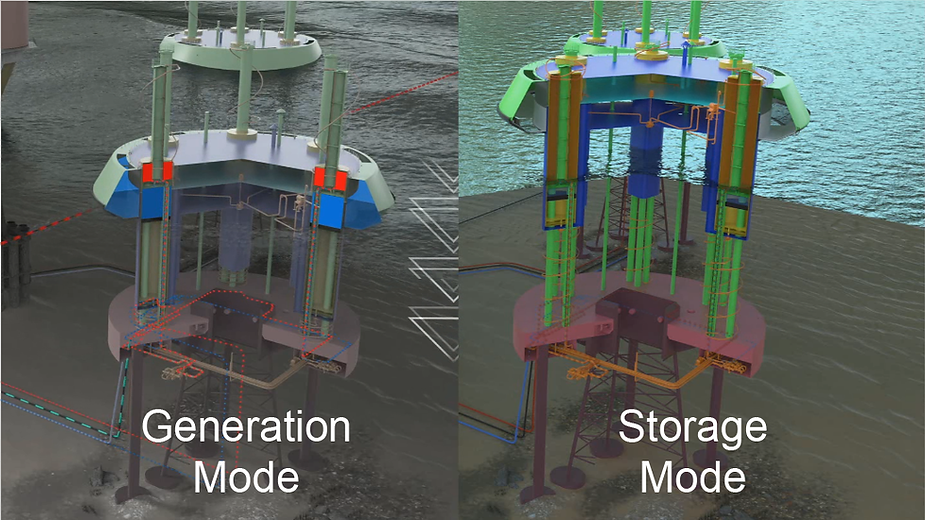
    TWEFDA ESWave generation mode and storage mode comparison

    2. DFMEA Process

    The DFMEA process consists of the following steps:

    Step 1: Define the System/Device and Requirements

    • System Overview: Energy device utilising wave energy or storage on demand.
    • Primary Function: Capture and convert wave energy into usable electrical power (wave energy) or store and release energy for later use (gravitational energy storage system).
    • Secondary Function: Provide reliable energy storage, manage charging/discharging cycles, and ensure system stability.

    Step 2: Identify Potential Failure Modes

    Each subsystem or component must be analysed for potential failure modes. For the energy device in question, failure modes could stem from both mechanical and electrical systems, as well as environmental factors.

    1. Wave Energy Conversion System

    Failure Mode 1: Structural failure of wave energy converters (WECs)

    • Effect: Loss of energy capture efficiency, physical damage to the system.
    • Potential Causes: Corrosion, fatigue from wave loading, material failure.
    • Severity: High (due to system downtime and repair needs).

    Failure Mode 2: Inaccurate wave tracking or positioning

    • Effect: Reduced energy generation, system misalignment.
    • Potential Causes: Sensor failure, control algorithm issues, mechanical misalignment.
    • Severity: Moderate (energy capture is suboptimal, but the device may still function).

    Failure Mode 3: Aging

    • Effect: Reduced energy generation, increased friction and reduction of energy generation as a result of the limited ability to provide ideal weight in reciprocation.
    • Potential Causes: Accumulation of biofouling in non-essential parts of the hull.
    • Severity: Moderate (energy capture is suboptimal, but the device may still function).

    2. Energy Storage System

    Failure Mode 1: Accumulation of biofouling

    • Effect: Increase in battery capacity but also increase in pressure for lifting purposes.
    • Potential Causes: The accumulation of biofouling, as a result of aging or lack of maintenance increase the weight which has implications in generation mode. In storage mode the increase in weight results in an increase in storage because the ESWave is a gravitational energy device whose storage directly depends on the mass.
    • Severity: Low.

    Failure Mode 2: Inaccurate state-of-charge (SOC) estimation

    • Effect: Energy imbalance, overcharge/undercharge, inefficient operation.
    • Potential Causes: Faulty sensors, algorithm error.
    • Severity: Moderate to High (depending on extent of imbalance).

    Failure Mode 3: Hydraulics failure (e.g., solenoid valves)

    The ESWave contains natural redundancies in some of the hydraulic valves but others are unique.

    • Effect: Loss of power conversion, system shutdown.
    • Potential Causes: Overvoltage, overcurrent, thermal stress, component aging.
    • Severity: High (interrupts power flow).

    3. Power Management and Control System

    Failure Mode 1: Control system failure (e.g., loss of control or disoperation)

    • Effect: Erratic system behaviour, damage to components, failure to optimise energy flow.
    • Potential Causes: Software bugs, hardware failure, communication loss.
    • Severity: High (system could become unstable or damage itself).

    Failure Mode 2: Loss of communication or sensor malfunction

    • Effect: Inability to properly monitor or adjust system performance.
    • Potential Causes: Sensor drift, broken wiring, and faulty connections.
    • Severity: Moderate (could result in suboptimal performance or incorrect readings).

    Failure Mode 3: Hydraulic components malfunction

    • Effect: Inability to properly operate or adjust system performance.
    • Potential Causes: Valve stiffness, pneumatic membrane in pressure vessels, turbine blades damaged.
    • Severity: Moderate (could result in suboptimal performance but it can also result of interruption in power flow). Some components in the TWEFDA Hub have a degree of redundancy, such as turbines and some valves, which means that, depending on the component the severity could vary.

    4. Environmental Factors

    Failure Mode 1: Saltwater corrosion of exposed parts

    • Effect: Material degradation, structural failure.
    • Potential Causes: Insufficient protective coatings, inadequate corrosion-resistant materials.
    • Severity: High (system components could fail prematurely, leading to costly repairs).

    Failure Mode 2: Extreme weather events (storms, high waves)

    • Effect: Damage to infrastructure, misalignment, operational failures.
    • Potential Causes: Inadequate design for environmental extremes.
    • Severity: High (potential for complete system failure if not designed for worst-case conditions).

    Failure Mode 3: Sea level rising

    • Effect: Need to increase cylinder’s height
    • Potential Causes: The planet is warming and ice sheets are thawing.
    • Severity: High (The devices will need to be disconnected, towed to a shipyard and adapted to the new conditions).

    Step 3: Risk Assessment (Severity, Occurrence, Detectability)

    For each failure mode, assess the following:

    • Severity (S): How severe is the consequence of the failure? (1 = minor, 10 = catastrophic)
    • Occurrence (O): How likely is the failure to occur? (1 = unlikely, 10 = very likely)
    • Detectability (D): How easily can the failure be detected before it causes harm? (1 = easy to detect, 10 = unlikely to detect)

    Assessment:

    Wave Energy Conversion System

    SODRPN
    Structural failure945180
    Wave tracking or positioning54240
    Aging692108

    Energy Storage System

    SODRPN
    Accumulation of biofouling15630
    SOC estimation33218
    Hydraulics failure964216

    Power Management and Control System

    SODRPN
    Control system764168
    Communication/Sensors86296
    Hydraulic components84396

    Environmental Factors

    SODRPN
    Saltwater corrosion793189
    Extreme weather992162
    Sea level rising92236

    Risk Priority Number (RPN):

    RPN = Severity × Occurrence × Detectability

    • Higher RPN values indicate higher priority failure modes that need more immediate attention.

    Step 4: Develop Mitigation Strategies

    For each high-priority failure mode (e.g., RPN > 150), propose actions to reduce risk.

    1. Structural Failure of Wave Energy Converters

    • Mitigation:
      • Use corrosion-resistant materials, such as stainless steel or composite materials.
      • Design for fatigue resistance, with regular inspections.
      • Implement real-time monitoring of structural health (e.g., using strain gauges or vibration sensors).

    2. Hydraulics Failure for Energy Storage

    • Mitigation:
      • Use reporting sensors.
      • Increase preventative.
      • Implement AI assisted predictive maintenance routines.

    3. Control System Failure

    • Mitigation:
      • Implement fail-safe and backup control systems (e.g., secondary controllers, manual override).
      • Robust software testing and error-handling protocols.
      • Regular software updates and monitoring.

    4. Saltwater Corrosion

    • Mitigation:
      • Regular maintenance and cleaning of exposed parts.
      • Use anti-corrosion coatings or sacrificial anodes on critical components.
      • Periodic inspection and replacement of affected parts.

    5. Extreme Weather Events

    • Mitigation:
      • Design the system to withstand extreme weather conditions (storm surges, high waves).
      • Implement dynamic positioning systems that allow the device to move in response to extreme conditions.
      • Incorporate fail-safe mechanisms to shut down or reduce power output during unsafe conditions.

    3. Conclusion:

    This DFMEA outlines the potential failure modes, risks, and mitigation strategies for a wave energy or energy storage device at an early stage of development. The key areas of focus include mechanical integrity, energy storage reliability, control system robustness, and environmental resilience. By addressing these failure modes early in the design process, the device’s chances of successful deployment and long-term operation are significantly improved.

    Additionally, the RPN values provide a priority ranking, helping to direct attention and resources to the most critical risk areas, ensuring that mitigation strategies are applied effectively.

  • POST 4 (Original) — The company valuation

    POST 4 (Original) — The company valuation

    Updated: Apr 21

    A £40M valuation!

    The valuation must be reasonable, taking into account a sensible scenario.

    To determine the company’s worth, we conducted our own valuation considering the team’s time investment, the company’s fundraising, the Government support, personal contributions, and an evaluation of the current potential value of the Intellectual Property (IP). The results of this assessment are presented in Table 1.

    Director’s contributions£289,950
    Crowdfunding and loans£11,600
    Government support£51,355
    Personal cash contributions£9,690
    IP£39,750,617
    Shareholders£3,950
    Current valuation£40,117,161
    Table 1. Assessed Company Valuation.

    Business Valuation Calculator

    In November 2022, TWEFDA conducted an evaluation using a Business Valuation Calculator, determining the value to be £6,479,248. This assessment took into account no more than just a single machine, including a sole GB patent application and a PCT filed on 1st June 2022, which initially covered only the UK.

    Presently, TWEFDA holds a patent pending status across Europe, the USA, Canada, and China, offering a value proposition that encompasses not just one, but potentially up to four machines within a single hardware unit. Additionally, there have been advancements related to the TWEFDA Hub and various innovative areas, such as the Weight Changing Energy and the Delay in falling, showing significant disruptive potential.

    On 26/03/2026 TWEFDA received a Decision to grant a European patent pursuant to Article 97(1) EPC. The decision took effect on 22/04/26, which is the date where the grant was published in the European Patent Bulletin 26/17.

    Considering these developments, we are confident that the calculation of the IP value is reasonable, hence the £40M accumulated valuation in October 2024.

    Comparing progress

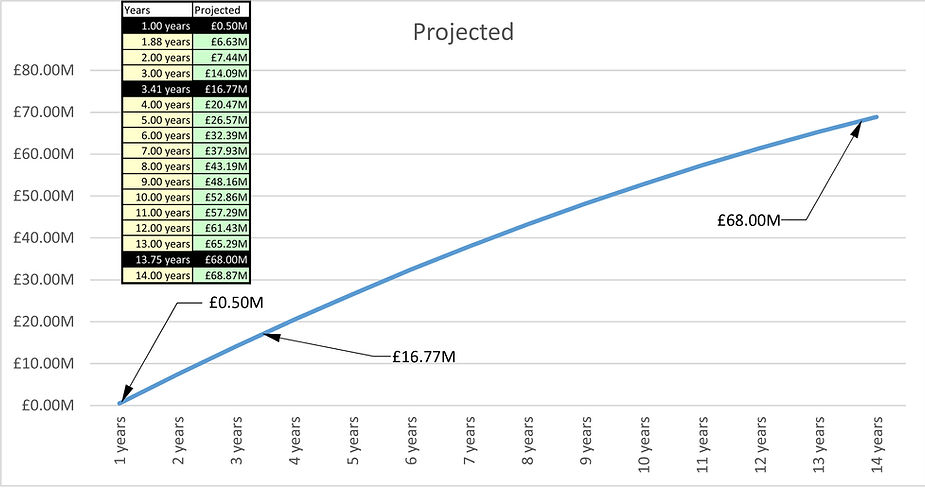
    Valuing intellectual property can present significant challenges. In order to assess its worth, we conducted an analysis of a leading wave energy developer in the industry. We devised an equation that incorporates three key data points representing the minimum, maximum, and average investment figures, each aligned with specific timeframes.

    Projected value of TWEFDA intellectual property based on the trajectory of a chosen wave energy developer
    Projected value of the Intellectual Property based on trajectory of the chosen Wave Energy Developer.

    Figure 1 displays the projected value of the Intellectual Property for a Wave Energy Developer.

    The outcome of the study is shown in Figure 1.

    Since our priority date is 19/05/2021, 3.41 years have ellapsed. Bringing them to the scale of progress of our chosen Wave Energy Developer, this results in a value of some £16.77M.

    Many assumptions can be made from this end since there are 2 main developments in the TWEFDA Association (the ESWave and the TWEFDA Hub – otherwise called Offshore Hybrid Assets). This could take the valuation to some £33M.

    Nevertheless, there are also 4 machines in one single piece of hardware. This could take the valuation to some £66M. Also there is a possibility to bring generation or storage on demand.

    Finally is all down to market and the market potential is immense (some £384B in 2028 according to our assessment in the post Securing your Investment).

    With all this in mind, and having into consideration the probability for success but also the fact that the technology is not proven yet (3 out of 4 machines are among us in other devices and the fourth is backed by peer reviewed desktop proof of concept), we concluded that the value of our development is no less than £40M in October 2024.

  • POST 3 (Original) — Problems TWEFDA solves

    Updated: Aug 3

    1. Balancing the Grid

    Generation or Storage is required by the grid at all times, indicating that these two functions complement each other.

    Grid balance is essential, and machines are used to achieve this. However, if power generation or storage device charging occurs when not needed by the grid, it can be detrimental. This is why neither generation nor storage alone is a perfect solution.

    Although Virtual Power Plants offer a beneficial means of digitally stabilising the grid, they pose challenges by creating a disconnect between the intelligent decisions made by digital algorithms and the end users who stand to gain from them.

    TWEFDA is developing a hybridly functional energy machine which, at grid scale and with high performance, provides either generation or storage on demand.

    This dispatchable energy includes two wave generation applications (5 MW per device), creating a hybrid wave generator, and two gravitational storage applications (2 MWh per device), forming a hybrid gravitational storage solution, all integrated into a single piece of hardware with a unified Power Take Off (PTO).

    Think balancing the grid is simple? Then why not give it a try!

    2. Decarbonising energy production

    During the Basecamp event on 28th February 2023, the Grid within the Smarter Networks Portal identified the issue known as EIP040 – How can we introduce flexibility to distribution networks? This problem is associated with integrating Low Carbon Technologies and the significant electrification of energy consumption.

    According to Nick Eyre from the University of Oxford, transitioning to renewables means transitioning to electricity, which improves energy efficiency. This transition could result in up to a 40% reduction in final energy demand, a trend that is rapidly increasing.

    Nevertheless, surplus generation when not needed leads to curtailment and insufficient renewable generation results in the burning of fossil fuels, hindering our decarbonisation objectives.

    The UK incurred nearly £1bn in curtailment costs in 2023.

    Historically, the grid balancing issue was addressed by burning fossil fuels, commonly gas.

    Our ambitious goal of achieving net zero globally requires the decarbonisation of energy generation. The dominance of Russian gas supply and the conflict in Ukraine have led to a gas shortage, causing prices to surge worldwide.

    TWEFDA has the potential to facilitate the decarbonisation of energy generation.

    3. Providing solutions for wave and storage developers

    Wave developers face challenges in bringing their products to market due to the need to create an economic model that justifies the substantial investment, manage associated risks, and ensure profitability for project amortisation. TWEFDA Limited conducted a thorough study on this issue.

    Storage developers, on the other hand, are hindered by the scarcity of rare metals and the ongoing debate surrounding their mining activities, which influences their interest in adopting new technologies.

    After demonstrating their concept in the short term, TWEFDA can incorporate Weight Changing Mechanisms to improve energy generation in other wave developers and expand the portfolio for storage developers by offering their gravitational energy battery solution.

    4. Providing alternative solutions to the energy market

    Wind power faces challenges due to the necessity of highly specialised equipment and electrochemical storage requiring rare metals, as previously discussed. However, the main issue arises from the need to produce two distinct machines, which is not aligned with the requirements of the National Grid.

    The concept introduced by TWEFDA aims to reduce the production of generators, prioritising grid balance over increasing energy output to ensure a stable energy supply, which appears to be the strategy following COP28 (as reported in this publication by IRENA).

    5. Lack of legislation for energy storage

    Creating a storage system aims to stabilise the Grid. However, constructing a battery requires a significant investment, and its overall energy balance ends up being negative due to its efficiency.

    By taking inspiration from nature, it is essential to maintain equilibrium in all our actions. Excessive electricity combined with curtailment guarantees constant lighting, but it also leads to resource wastage. Conversely, insufficient electricity is unacceptable as it can result in a blackout.

    Nevertheless, the absence of regulations and a significant demand for them are evident in conventional energy storage projects, as indicated by the construction of the Limmern pumped-storage.

    An alternative strategy involves integrating storage as a dual-purpose element of the end product. For example, MIT has developed an innovative sustainable concrete that can store energy, combining construction and renewable energy.

    Energy Vault and SOM are proposing the construction of towers ranging from 300 to 1,000 meters in height that are capable of storing green energy.

    As reported by Earth.org, the global installation of battery storage saw a decline in 2019, attributed in part to inefficient legislation governing deployment and usage. The IEA notes that the sector lacks transparency and focuses more on technology types rather than capacity and installation considerations, hindering the entry of new systems despite their readiness for deployment.

    Our Business Plan delves into the significance of storage. However, despite its necessity, a project solely focused on storage must be financially viable by leveraging the energy price differential. This involves buying energy when it’s abundant at a lower price to store it, and then releasing stored energy back to the grid when energy is scarce at a higher price, with an average of 80% being sold back.

    Yet, this business model relying on price differentials often may not warrant the necessary investment.

    If the ESWave, which is a machine that is by nature a generator can also serve as a source of energy storage on a large scale, with high flexibility and efficiency, governments worldwide may not have to enact specific legislation regarding storage.

    6. The Oil & Gas decarbonisation targets

    McKinsey & Company states that for the oil and gas sector to contribute effectively to the necessary efforts in combating climate change, a reduction of at least 3.4 gigatons of carbon-dioxide equivalent (GtCO2e) annually by 2050 is imperative. This reduction would signify a 90% decrease from current emission levels, aligning with the urgency felt by 71% of individuals across 18 G20 countries who believe immediate action is crucial within the next decade to lower carbon emissions.

    There are few offshore machines that can generate energy on the scale needed by the oil and gas industry for the required durations. A TWEFDA Association can effectively meet the industry’s needs consistently.

    7. The offshore industry

    For offshore generators, primarily wind and solar, there is typically an export cable that transports the generated power from an offshore substation directly to the shore. Shortening this cable is not only more cost-effective but also reduces the associated risks for the facility. By reducing the length of this cable, we can create an energy bypass in the middle of the ocean, store excess energy to align with Grid demand, and utilise any surplus energy to produce hydrogen or desalinate water.

    The offshore industry’s generation, primarily in solar, wind, and wave energy, stands to gain from reducing the length of their export cables. They can also enhance their production by leveraging the import/export functionalities offered by our TWEFDA Hub, utilising their energy for storage, conversion into hydrogen, desalination, or carbon capture, should technology advance in the coming years.

    8. Connecting countries (Energy Arbitrage)

    We anticipate that our tool will be highly profitable, meaning that each project will have its own financially sustainable plan. What if we were able to establish additional electricity corridors connecting countries such as Denmark and the UK via the North Sea or Sweden and Lithuania via the Baltic Sea?

    This approach would not only ensure the success of our projects, but also enable us to establish import/export lines to mitigate resource intermittency by enhancing global grid connectivity, while simultaneously promoting cooperation by establishing connections with neighboring regions for a more interconnected world.

    This is an ongoing business focusing solely on Energy Arbitrage. The North Sea Link connecting Kvilldal in Norway to Blyth in the UK spans 720 Km and is a collaboration between Statnett in Norway and National Grid PLC in the UK (from March 2015 to June 2021). Originally priced at €2B, it yielded a net income of €2.75B in 2022 alone. The UK currently has 6 interconnections, including IFA and IFA2 (France – England), BritNed (UK – Netherlands), NemoLink with Belgium, Viking Link with Denmark, and NSL with Denmark (Matt Hinde, Head of European Affairs for National Grid, emphasises the importance of Offshore Hybrid Assets in energy transition).

    This video by Dave Borlace discusses the £2.8 billion energy link between the UK and Germany. I view this as a significant project that could potentially incorporate connections for our TWEFDA Hub to help balance both grids.

    Ofgem has approved a multibillion-pound electrical superhighway, allowing the construction of a 2GW subsea connection between Peterhead and Drax on the east coast of England. Additionally, Shetland has also been connected.

    On January 8, 2025, we received the news that the UK and Netherlands plan to link their grids through the Nederwiek 3 Offshore Wind Farm.

    Expanding the scope of harnessing is the most effective method to minimise intermittencies. A fully interconnected world would ensure that a lack of wind in one location, such as Scotland, does not imply a lack of wind in another, like Denmark. Importantly, the gradual establishment of connections between countries can be facilitated by the financially viable plans of each individual project.